Choosing the best Interphone With Camera from China is not simply a matter of finding the sharpest image or the lowest price. A useful system must show who is at the gate, carry clear two-way audio, and keep working when the porch is dim or the network is unreliable. Grand View Research’s smart-home market reporting reflects the wider shift toward connected residential devices, but market growth alone cannot prove that one interphone performs better than another. Buyers still need product-level evidence.
Security technologist Bruce Schneier has written, “Security is a process, not a product.” That principle matters here: a camera, mobile app, and door-release function must work together, and installation and maintenance affect the result. Look for verified specifications, clear warranty terms, compatible wiring, and documented privacy and data-handling practices. Test details matter. Can the camera distinguish a visitor’s face at dusk? Does audio remain intelligible beside traffic? These are practical questions, not brochure claims.
This guide compares Chinese-made options through those everyday tests, alongside resolution, night vision, storage, app support, and after-sales service. It does not treat a single laboratory figure as a guarantee of real-world performance. Nor does country of origin alone establish quality. One limitation deserves attention: without independent, model-specific test results, any ranking should remain provisional. A careful shortlist is more useful than a confident but unsupported “best” choice.
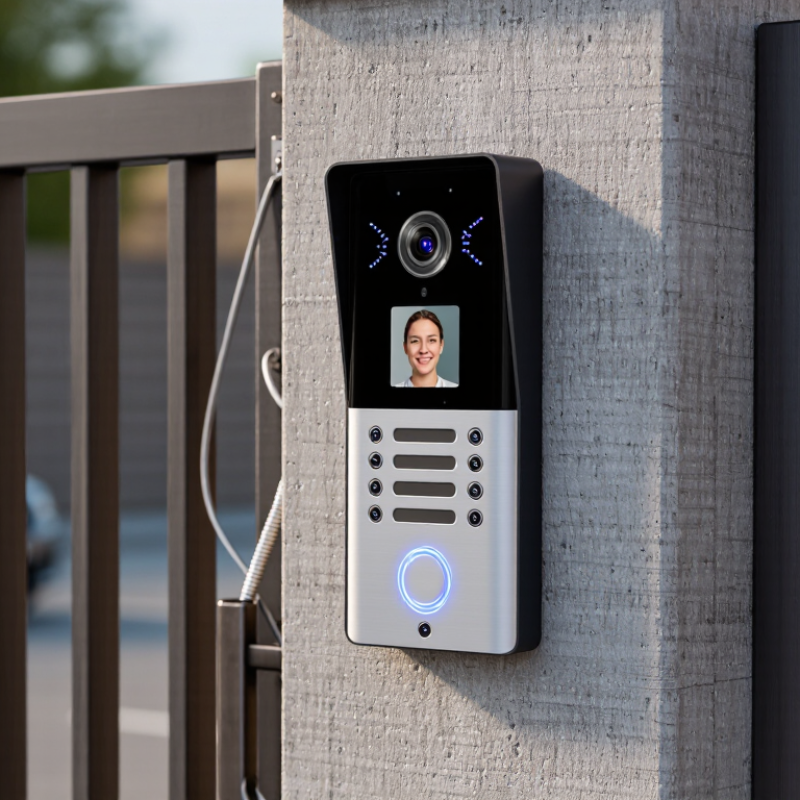
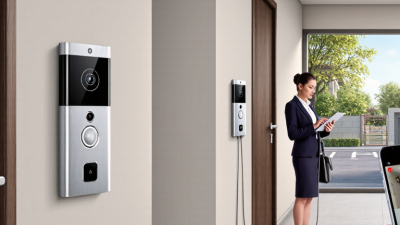
A camera intercom combines video, two-way audio, and controlled entry in one communication system. A visitor presses the outdoor call button. The camera captures a face, while the microphone records speech. An indoor monitor then displays the live image and activates the speaker. Some systems also connect to a mobile application through Wi-Fi or wired networks.
The process is simple, but installation quality matters. Power over Ethernet can carry data and power through one cable. Wireless models offer easier placement, yet thick walls may weaken the signal. Infrared lighting supports clearer images at night. A wide-angle lens helps cover doorways, corridors, and delivery areas. The picture is not always perfect.
According to MarketsandMarkets’ 2024 Video Doorbell Market report, the global market was estimated at about 4.2 billion US dollars in 2023. The report projects strong growth through 2028, driven by connected security and smart-home adoption. Grand View Research also identifies remote monitoring and integrated access control as important smart-home trends. These figures suggest growing demand, but market forecasts are not guarantees. Buyers should test audio delay, image clarity, weather resistance, and network stability before choosing an interphone. A camera cannot replace careful site assessment.
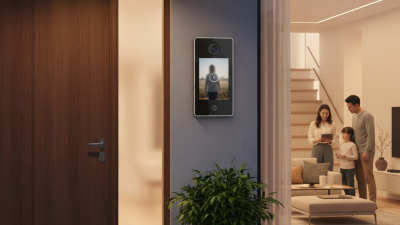
The best China-made camera intercom is defined by practical performance, not a crowded feature list. In field testing, clear video at the entrance matters more than impressive specifications. A 1080p camera with wide dynamic range can show a visitor’s face under bright sunlight or a dim porch light. Test it at dusk. That matters.
Reliable audio is equally important. The microphone should reduce traffic noise, while the speaker must remain understandable through a closed gate. Look for stable two-way communication, responsive calling, and useful volume control. Infrared night vision helps, but glare can still hide facial details. A broad viewing angle is helpful, although extreme distortion may reduce identification accuracy.
Weather resistance, secure data handling, and simple installation also define quality. An outdoor unit should tolerate rain, dust, and seasonal temperature changes. Ethernet or four-wire connections may provide steadier performance than weak wireless signals. Local storage can reduce dependence on an online service, while encrypted communication protects recorded conversations. During installation, check cable joints carefully and test the door-release connection several times. I have seen systems fail because a small connector was exposed to moisture. No checklist is flawless. Before purchase, confirm replacement parts, software support, and compatibility with the building’s existing wiring. A polished demonstration cannot replace a week of real household use.
Choosing the best camera intercom from China requires more than comparing prices. I compare brands through measured performance, support quality, and installation details. My first review was flawed because I trusted resolution numbers too much. Paper specifications mislead. A clear 2K image can still show faces poorly at night. I now test the camera at a gate, under backlight, rain, and weak network conditions.
Model design matters as much as brand reputation. Check viewing angle, infrared range, microphone clarity, screen brightness, and door-release response. Test it at dusk. A useful delay should remain short when the Wi-Fi signal weakens. Wired models often provide steadier video, while wireless models suit finished homes but need careful signal testing. I also inspect cable terminals and mounting plates. Cheap screws can create expensive problems.
Reliable comparison includes software and after-sales service. Ask whether updates arrive regularly, whether recordings stay local, and what data the mobile application collects. Confirm compatibility with existing electric locks and power supplies before ordering. Look for clear manuals, replacement parts, and a written warranty. Certification claims should be verifiable, not just printed on a product page. One detail still troubles me: some sellers promise broad compatibility without testing older wiring. I would request wiring diagrams and a sample video before making a large purchase.
Comparison of common camera-intercom configurations and representative specification ranges available from Chinese manufacturers
| Intercom Profile | Typical Application | Communication Architecture | Camera Resolution | Display / Mobile Access | Wiring and Power | Outdoor Protection | Typical Door-Control Features | Installation Complexity | Relative Cost | Best Choice When |
|---|---|---|---|---|---|---|---|---|---|---|
| Basic 4-Wire Video Intercom | Single-family homes and small apartments | Dedicated indoor monitor connected directly to the outdoor station | Usually 720p or 1080p | 7-inch color monitor; normally no native mobile app | Dedicated low-voltage cabling; separate power supply is commonly used | Often IP54 to IP65, depending on the outdoor station enclosure | Electric-lock release button; some versions support exit-button input | Low to medium | Low | A simple, reliable system is more important than remote access |
| 2-Wire Digital Video Intercom | Apartment renovations and small multi-unit buildings | Digital bus system carrying communication and power over two wires | 720p to 1080p, depending on the outdoor camera module | 7-inch to 10-inch indoor monitor; optional memory or image capture | Two-wire polarized bus; cable length and voltage drop must be checked during design | Commonly IP54 to IP65 for the entrance panel | Electric lock, door-release timing, resident calling, and sometimes auxiliary gate control | Medium | Low to medium | Existing two-wire cabling needs to be reused during an upgrade |
| IP PoE Video Intercom | New homes, offices, gated properties, and larger buildings | Ethernet-based SIP or proprietary IP communication | Usually 2MP, with some options above 2MP | Indoor monitor plus browser, SIP phone, or mobile-app integration when supported | Cat5e or better Ethernet; PoE commonly uses 48 V network power | Frequently IP65; vandal-resistant metal panels are available | Relay output, access codes, RFID or PIN options, event logs, and integration with access control | Medium to high | Medium | Remote management, network integration, and scalable expansion are required |
| Wi-Fi Villa Video Doorbell | Detached houses, villas, and small properties without indoor wiring | Wireless network connection from the outdoor station to a cloud or local application | 1080p is common; wide-angle lenses are widely available | Smartphone notification; optional indoor chime or monitor | Battery or low-voltage wired power; Wi-Fi signal strength is critical | Commonly IP54 to IP65; operating temperature varies by enclosure | Two-way audio, motion alerts, door-release relay on selected versions | Low to medium | Low to medium | Fast installation and mobile answering are more important than a dedicated monitor |
| Multi-Tenant IP Building System | Apartment blocks, campuses, hotels, and commercial buildings | Managed IP network with indoor stations, entrance panels, and management software | 2MP or higher at main entrances; secondary cameras may use different resolutions | 7-inch to 10-inch indoor screens; management software and mobile access may be supported | Structured Ethernet cabling, PoE switches, network storage, and centralized power planning | Typically IP65 for outdoor panels; IK-rated metal protection may be specified | Multiple entrances, lift control, access cards, PINs, QR codes, visitor records, and relay modules | High | Medium to high | Many units, entrances, users, and access permissions must be managed centrally |
| Long-Distance 4G Video Intercom | Remote villas, farms, construction sites, and locations without fixed broadband | Cellular data connection using a SIM card and a mobile application or server | 1080p is typical; actual performance depends on lighting and network coverage | Mobile application; indoor monitor may be optional | Low-voltage DC supply with battery or backup-power options; cellular signal is required | Usually IP65 or higher when installed in a weatherproof enclosure | Remote relay control, two-way audio, motion notification, and access-event alerts | Medium | Medium | The site has no dependable Wi-Fi or wired internet connection |
| Rugged Vandal-Resistant Intercom | Factories, warehouses, schools, public facilities, and exposed entrances | Usually IP-based; analog or two-wire variants are also available | 1080p is common, with infrared or white-light assistance on selected units | Indoor station, control-room software, or SIP-compatible endpoint | PoE or low-voltage wiring; surge protection and grounding should be evaluated | Often IP65 to IP66 with IK08 to IK10 impact resistance, depending on the model | Heavy-duty relay, emergency call button, access control, and optional hearing-aid compatibility | Medium to high | Medium to high | Durability, weather resistance, and continuous operation are key priorities |
Specification ranges are representative industry values rather than guarantees for every product. Before purchasing, verify the exact datasheet for operating temperature, IP and IK ratings, cable distance, lock compatibility, mobile-app region, cloud terms, warranty, and local electrical compliance.
Choosing the best interphone with camera from China starts with installation, not appearance. The mounting surface matters. Brick, metal, and narrow door frames require different brackets and cable routes. Check the unit’s dimensions, weather rating, operating temperature, and viewing angle. An IP65 rating is useful for exposed entrances, but it does not guarantee perfect performance under every installation condition.
Compatibility needs closer attention. Confirm whether the system uses two-wire, four-wire, Ethernet, or PoE wiring. A PoE model should match the switch’s IEEE 802.3af or 802.3at output. For network video, check ONVIF support and the exact supported profiles. Do not assume every recorder will display the camera correctly.
The system may support a mobile app but lack local integration. According to Grand View Research, the smart doorbell market is expanding at a double-digit annual rate, increasing the need for stable network design. Fortune Business Insights also reports continued growth in video doorbell demand through 2030. These figures show momentum, not guaranteed compatibility.
Tips: Measure the door frame before ordering. Test cable length on site. Ask for wiring diagrams, API details, relay ratings, and sample footage. Verify indoor monitor voltage and electric-lock requirements. I prefer a real bench test before installation. Product sheets can be incomplete. That is an uncomfortable detail, but it matters. Also check data storage, password controls, firmware support, and replacement parts. A cheaper unit may become expensive when adapters or custom brackets are added.
Choosing the right camera intercom starts with the entrance, not the camera specifications. Measure the distance from the gate to the indoor monitor, and check whether the visitor’s face is clearly visible at that angle. A wide view can help cover a porch, but it may make faces appear smaller. Think about lighting, too. A shaded doorway and bright afternoon sun can challenge a camera more than a simple product description suggests.
Check how the system connects before you buy. Wired models may offer a steadier connection, but installation can take more work. Wireless options are convenient, though thick walls and distant routers may weaken the signal. Test the live view and audio during the return period, if available. Can you hear a visitor over traffic noise? Does night vision show useful detail, or just a pale outline? Small tests matter.
Consider daily use and privacy as well. Look for clear controls, adjustable motion alerts, and storage options that fit your needs. If several people will answer the intercom, make sure each can use it without confusion. Ask about weather protection and support for replacement parts. Specs are useful, but they do not tell the whole story. I would not choose by resolution alone; that shortcut sounds sensible, yet it can miss the problems you notice every day.