How to Choose the Best Smartphone Wireless Video Doorbell?
Choosing the right Smartphone Wireless Video Doorbell can feel overwhelming. With so many options available, it's easy to get lost. Expert Angela Chen, a tech reviewer, emphasizes, “The right doorbell can enhance your home's security and convenience.”
Many users look for reliability and clear video quality. However, there are often trade-offs. A more expensive model might not suit every budget. On the other hand, a cheaper option may lack essential features.
Installation can also be a hurdle. Some doorbells are easy to set up, while others require professional help. Understanding your needs and preferences is crucial. This way, you can select a Smartphone Wireless Video Doorbell that truly fits your lifestyle.
Understanding Key Features of Wireless Video Doorbells
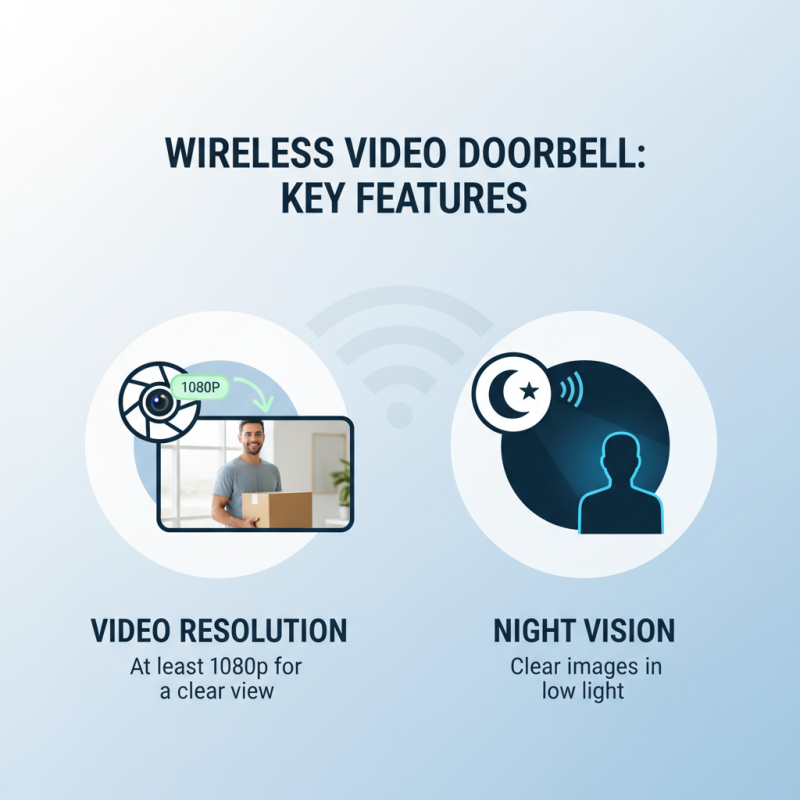
When choosing a wireless video doorbell, understanding its key features is vital. Video resolution is one of the most important aspects. A clear image allows you to see who is at your door. Look for models with at least 1080p resolution for a crisp view. Night vision capability is another crucial feature. It ensures the doorbell captures images in low light. This is helpful during evening hours or dark environments.
Motion detection also plays a key role. A reliable system should alert you whenever someone approaches your door. However, some devices have issues with false alarms triggered by pets or passing cars. This can be frustrating. Additionally, consider the field of view. A wider angle allows you to see more of the area outside your door. If the field of view is too narrow, it might miss important details.
Two-way audio is a nice feature too. It lets you communicate with visitors without opening the door. However, the audio quality can vary greatly between models. Sometimes, users find it difficult to hear clearly. Battery life is another aspect worth mentioning. Some doorbells require frequent charging, while others last for months. Finding the right balance may take time and research. Ensure you choose a device that suits your lifestyle and needs.
Evaluating Video Quality: Resolution and Field of View Metrics
When choosing a smartphone wireless video doorbell, video quality is crucial. Resolution is one of the key metrics to consider. A higher resolution means clearer images. Look for devices that offer at least 1080p HD video. This allows you to recognize faces and details easily. 720p may seem sufficient, but it often results in fuzzy images.
Field of view is another important aspect. A wider field of view captures more of your entrance area. Many models offer between 120 to 180 degrees. A narrow view can miss important details. This can be frustrating when you need to see who is at the door. Sometimes, wider views can distort images. Balancing resolution and field of view is essential.
It’s also worth noting that environmental factors affect video quality. Poor lighting can impact clarity. Even with high resolution, low light conditions may result in grainy footage. Additionally, weather can affect performance. Rain or fog can obstruct the camera's view. Testing devices in various conditions is a smart approach. You may find that what works in ideal conditions falters in real-life scenarios.
Battery Life and Power Options: What to Consider
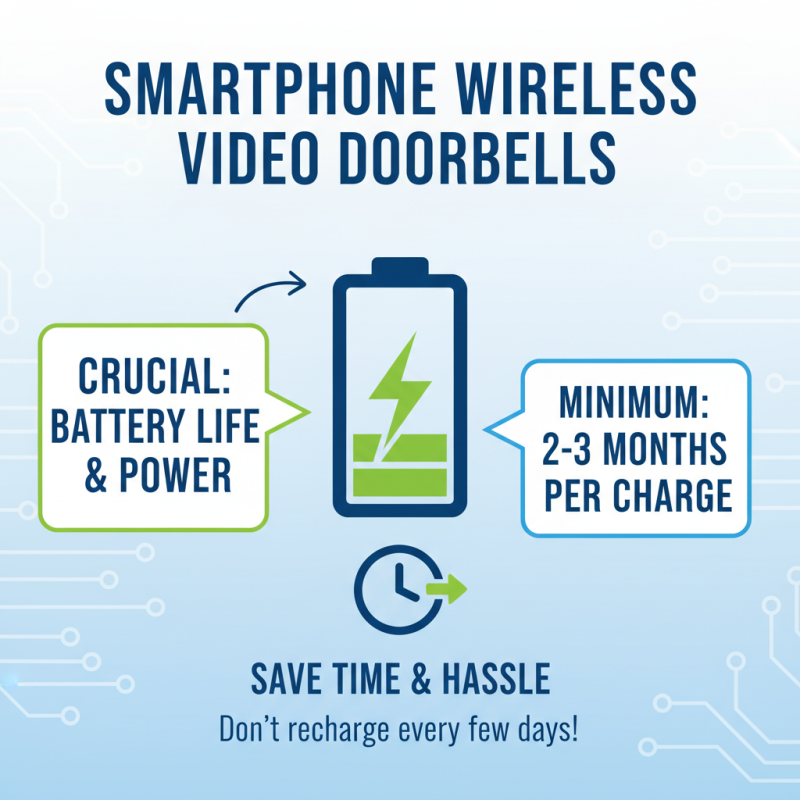
When choosing a smartphone wireless video doorbell, battery life and power options are crucial. A doorbell with a long-lasting battery can make a significant difference. You don't want to find yourself recharging it every few days. Look for models that claim a minimum battery life of two to three months on a single charge. This can save you time and trouble.
Also, consider power options that fit your lifestyle. Some doorbells can be hardwired, while others rely solely on battery power. A hardwired doorbell may offer more reliability and eliminate the need for frequent charging. If you live in an area with unreliable power, this might not be the best option for you.
Don't overlook the importance of battery type. Lithium-ion batteries tend to perform better over time compared to others. However, cheaper models may use less efficient batteries. Think about your installation and usage plans. You'll want a balance between ease of use and long-term reliability. It's an important decision that deserves thorough consideration.
Smartphone Compatibility: A Guide to OS and App Requirements
Choosing a smartphone wireless video doorbell involves understanding its app and operating system (OS) requirements. Compatibility is crucial. Many video doorbells work seamlessly with both Android and iOS devices. Make sure to check if your smartphone supports the app. The latest updates on the OS can enhance compatibility, but they can also introduce bugs. Ensure your phone is updated, but be cautious with new versions that may negate doorbell functionality.
It’s also important to consider the app’s user rating on your device’s store. A poorly rated app can lead to frustrating experiences. Features might not work as advertised. Some users report issues with notifications. Check the reviews to see if others faced problems. Remember, even if the doorbell claims compatibility, it might not perform smoothly on all devices.
Battery life and data usage are other practical concerns. Some apps drain battery unnecessarily. Look for options that allow customization of video quality and alert frequency. Also, ensure a stable Wi-Fi connection, as poor signals can disrupt usage. Each feature affects your overall experience. Always reflect on your needs before committing to a purchase. Do thorough research to avoid costly mistakes.
Security Features: Encryption Standards and Data Privacy Concerns
When selecting a wireless video doorbell, security features should be a top priority. Encryption standards are vital. They protect data as it travels between your device and the cloud. Look for end-to-end encryption. It ensures that only you can access the video footage. However, not all companies implement this correctly. Some may claim robust security but offer little in practice.
Data privacy concerns are significant. Your video recordings may contain sensitive information. Hackers are always searching for weak points. A breach could expose personal details. It's essential to understand the data management policies of manufacturers. Some companies may sell user data. Transparency is key in maintaining your trust. Asking questions is important. Are they clear about how they use your data?
Finally, regular software updates are crucial. These updates help patch security vulnerabilities. But they can also be overlooked. Ensure that your device can receive updates consistently. It's worth checking the manufacturer’s track record for updates. While technology is designed to enhance safety, it’s your responsibility to prioritize your privacy. Always stay informed and cautious.