The Best Ip Door Entry System for Secure Access Solutions?
In today's world, security is not optional. An IP Door Entry System offers a modern solution for secure access. These systems use internet protocol technology to control who enters your premises. Their effectiveness lies in their ability to integrate seamlessly with existing security infrastructures.
A reliable IP Door Entry System provides real-time monitoring and management. Features like remote access and smartphone connectivity enhance user convenience. However, choosing one can be challenging. Many options claim to be the best, yet some fall short. Quality and functionality can vary significantly among products.
Investing in a robust system is essential. Look for trustworthy brands that prioritize security. Researching features and reading user reviews can guide your decision. Remember, a good IP Door Entry System should balance security needs with ease of use. The right choice can safeguard your assets and ensure peace of mind.
Understanding IP Door Entry Systems and Their Functionality
IP door entry systems are transforming how we manage access control in various settings. These systems rely on Internet Protocol (IP) technology, allowing for remote management and monitoring. According to a 2022 industry report, the global market for IP-based access control systems is projected to grow at a compound annual growth rate (CAGR) of 11%, reflecting an increasing demand for secure access solutions.
Functionality is a key advantage of IP door entry systems. They offer features such as video surveillance, intercom capabilities, and real-time notifications. This integration enhances security measures significantly. Additionally, a study revealed that installations of IP-based systems reduced unauthorized access attempts by over 30%. However, these advancements come with challenges. For instance, the reliance on network connectivity can create vulnerabilities to cyber threats. Regular updates and security audits are essential to mitigate these risks.
Moreover, the user experience plays a critical role in the adoption of these systems. Complexity can discourage users from fully leveraging their features. A survey indicated that 25% of users struggle with configuration and remote access. This points to an area where further education and user-friendly designs are necessary. Balancing security and usability remains a challenge that industry experts must address.
The Best IP Door Entry System for Secure Access Solutions
| Feature |
Description |
Benefits |
Security Level |
| Remote Access |
Allows users to unlock doors via smartphones or tablets. |
Convenience and increased accessibility. |
High |
| Video Intercom |
Integrates video feed to see visitors before granting access. |
Enhanced security and identification. |
Very High |
| Biometric Authentication |
Uses fingerprints or facial recognition for access. |
Unique identification, reducing unauthorized access. |
Extremely High |
| Two-Way Audio |
Enables communication between the entry point and user. |
Improves visitor management and interaction. |
High |
| Access Control Management |
Allows easy management of user permissions and logs. |
Centralized control over access, reduces risk. |
High |
Key Features to Consider When Choosing an IP Door Entry System
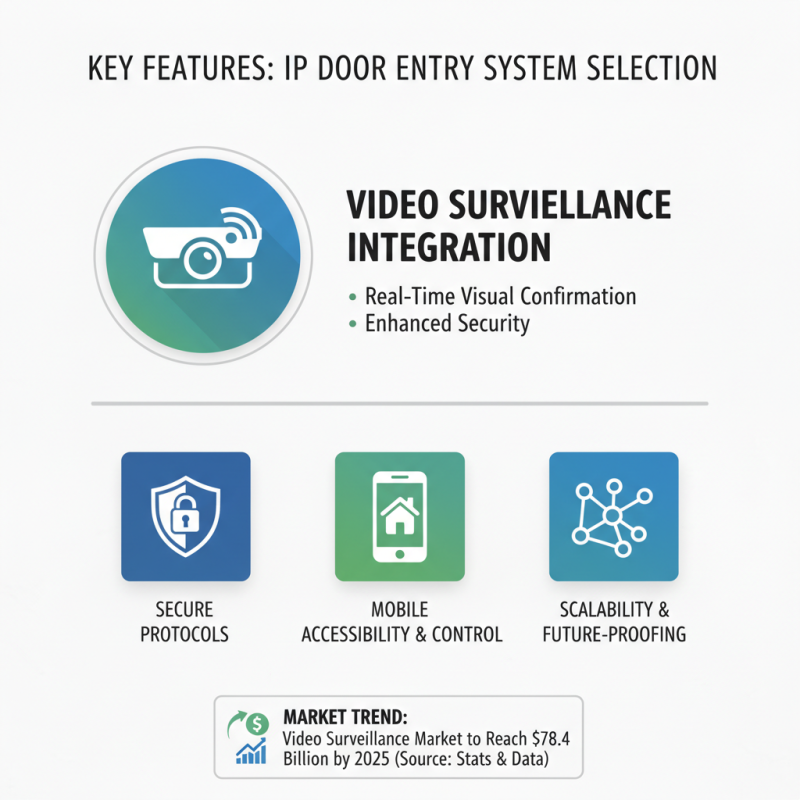
When selecting an IP door entry system, certain key features are vital for ensuring robust security. One important aspect is video surveillance integration. A study by Stats & Data predicts that the video surveillance market will reach $78.4 billion by 2025. This suggests that incorporating video capabilities into access systems enhances security and provides real-time visual confirmation of visitors.
User-friendly interfaces are also crucial. A 2021 survey indicated that 65% of users prefer systems that are easy to navigate. Complexity can lead to mishandling and frustration. Simplicity in design ensures that security measures are effectively employed without confusion. Additionally, an effective IP system should support mobile access. Reports show that 55% of security decisions are made via mobile devices. Thus, the ability to manage entry from smartphones or tablets increases convenience and oversight.
Tips: Always check the system's compatibility with your existing security infrastructure. This can save you from costly upgrades. Investing in a system with excellent customer support is wise, as technical issues can arise. Regular training for staff on using the system will prevent mishaps. While many systems claim to be user-friendly, it's crucial to test them yourself. User experience can vary significantly.
Comparative Analysis of Leading IP Door Entry Systems on the Market
When it comes to securing access points, IP door entry systems have gained popularity. A comprehensive comparison shows that these systems vary widely in features and effectiveness. Users should carefully consider the reliability of the connection. Some systems may lag during peak hours, creating potential vulnerabilities.
Functionality is another critical area. Many systems offer video intercom features, allowing for real-time communication. However, not all systems support high-definition video. Low-resolution images can hinder identification and security. Furthermore, user interfaces differ significantly, impacting usability. Some systems are intuitive, while others can frustrate users.
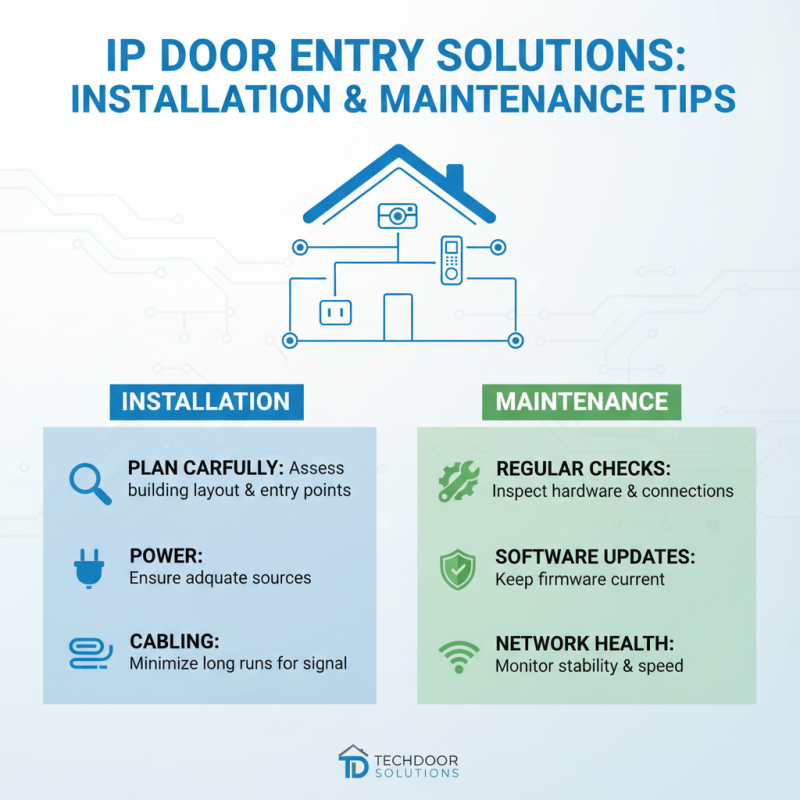
The installation process often reflects a system's overall design quality. Simpler systems can be set up quickly, but may lack advanced features. Users must weigh convenience against functionality. After investing in a sophisticated entry system, an ineffective integration can undermine its advantages. Careful analysis of support services is essential. An unresponsive customer service team can lead to prolonged downtime.
The Future of IP Door Entry Systems and Emerging Technologies
The evolution of IP door entry systems is driven by emerging technologies. They enhance security while offering convenience. According to a recent report by MarketsandMarkets, the global access control market is projected to reach $11.2 billion by 2027. This growth highlights the demand for sophisticated security solutions.
Biometric authentication is gaining popularity. It offers high accuracy and minimizes unauthorized access. A report from Grand View Research indicates that the biometric access control market will expand at a CAGR of 17.5% from 2021 to 2028. However, reliance on biometrics raises concerns about privacy and data protection. Organizations must address these issues.
Cloud-based systems continue to transform access management. They provide flexibility and real-time updates. The ability to integrate with existing systems adds value. Yet, challenges remain. Cybersecurity threats are increasingly sophisticated. Companies must prioritize strong security protocols. Balancing innovation and safety is crucial.