Top 2025 Smartphone Wireless Video Doorbell: Ultimate Guide to Smart Home Security
In today's fast-evolving tech landscape, the significance of smart home security solutions cannot be overstated. Among the latest innovations, the Smartphone Wireless Video Doorbell stands out as a pivotal device that enhances home safety while offering unparalleled convenience. This guide delves into the top options available in 2025, providing homeowners with a comprehensive overview of features, functionalities, and benefits.
As urban living increasingly prioritizes security and seamless connectivity, the Smartphone Wireless Video Doorbell emerges as an essential tool for monitoring entry points. With advancements in camera quality, motion detection, and two-way communication, these devices not only allow users to see who is at their door from anywhere but also enable them to engage with visitors remotely. Whether you're at home or on the go, this technology ensures peace of mind and an added layer of protection for your family.
Join us as we explore the best Smartphone Wireless Video Doorbells of 2025 and empower your home with smart security solutions that cater to your lifestyle and needs. This ultimate guide aims to arm you with the knowledge necessary to make informed decisions, ensuring your home remains a safe haven in an increasingly connected world.
Understanding the Benefits of Wireless Video Doorbells for Home Security
Wireless video doorbells are rapidly becoming essential components of smart home security systems, providing homeowners with enhanced visibility and control. According to a report by Markets and Markets, the global smart doorbell market is expected to grow from $3.3 billion in 2021 to $7.5 billion by 2026, underscoring the rising demand for these devices. By integrating video capabilities and wireless connectivity, these doorbells allow users to monitor their property in real time and receive alerts on their smartphones, thus improving response time to potential security threats.
Tips for choosing the right wireless video doorbell include considering features such as video resolution, field of view, and night vision capabilities. A doorbell with at least 1080p resolution will provide clearer images, making it easier to identify visitors. Additionally, look for models with wide-angle lenses that cover more area and those equipped with two-way audio, which allows you to communicate with visitors or deter intruders remotely.
Moreover, ensure that the device you select is compatible with your existing smart home ecosystem. As reported by Statista, nearly 70% of consumers prefer devices that seamlessly integrate with their current systems. This compatibility not only increases the convenience of usage but also enhances overall security by consolidating controls into a single app.
Top 2025 Smartphone Wireless Video Doorbell: Ultimate Guide to Smart Home Security
| Feature |
Description |
Benefit |
| Video Quality |
1080p HD resolution with night vision |
Clear visuals for better identification |
| Two-Way Audio |
Real-time communication through the app |
Interact with visitors remotely |
| Motion Detection |
Customizable motion alerts & zones |
Immediate notifications for suspicious activity |
| Storage Options |
Cloud storage and local storage options |
Flexible data management according to user preferences |
| Smart Home Integration |
Compatible with various smart home systems |
Enhanced security through interconnected devices |
| Weather Resistance |
IP65 rated for water and dust resistance |
Durability in various environmental conditions |
Key Features to Look for in a 2025 Smartphone-Compatible Video Doorbell
When choosing a smartphone-compatible video doorbell in 2025, several key features should be on your radar to ensure optimal home security. First, high-definition video quality is essential. Look for doorbells that provide at least 1080p resolution, allowing for clear visuals of visitors regardless of lighting conditions. Night vision capabilities enhance this feature, ensuring visibility during the dark and adding an extra layer of security.
Another critical aspect to consider is motion detection technology. Advanced doorbells utilize smart algorithms to differentiate between humans and pets, minimizing unnecessary alerts while ensuring you are notified of potential security threats. Two-way audio is also a significant feature, enabling real-time communication with visitors and allowing homeowners to deter unwanted individuals even when they are not at home. Additionally, cloud storage options for recorded footage can be invaluable, allowing you to review and save important moments as needed. These features collectively enhance the functionality and reliability of your smart doorbell, making it a crucial component of your smart home security system.
Top 2025 Smartphone-Compatible Video Doorbell Features
Comparing Top-Rated Video Doorbells: What Sets Them Apart?
When comparing top-rated video doorbells, several features set them apart, catering to diverse user preferences and needs. One of the most significant distinctions lies in video quality. High-definition resolution, such as 1080p or even 4K, provides crystal-clear images, allowing homeowners to identify visitors and detect details in their surroundings more effectively. Additionally, the field of view varies among models; some may offer a wider angle, facilitating better coverage of the front porch or entryway.
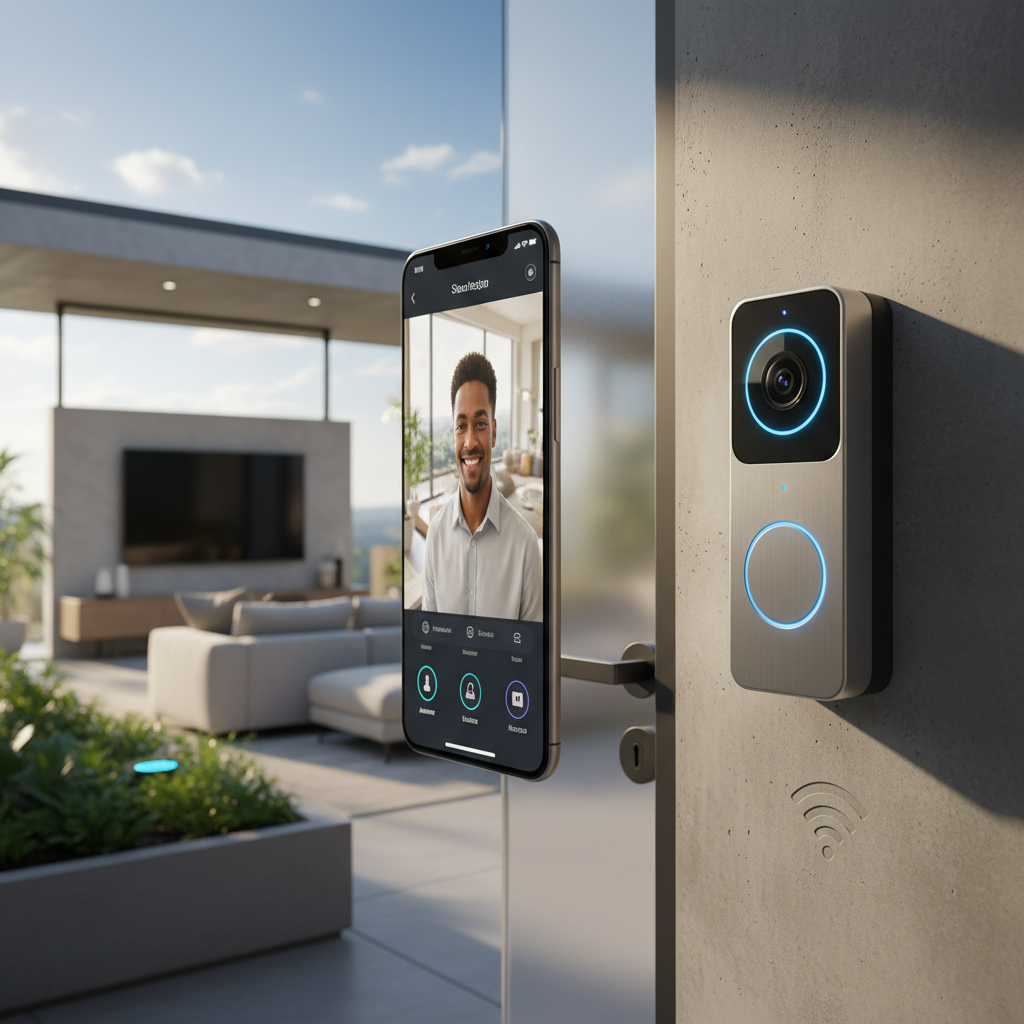
Another crucial factor is the integration with smart home ecosystems. Many video doorbells now support compatibility with popular voice assistants like Amazon Alexa or Google Assistant, allowing for seamless control and interaction. Features like two-way audio, motion detection alerts, and cloud storage options also vary, adding value to the consumer experience. For instance, certain brands provide customizable motion zones, enabling users to avoid unnecessary alerts from passing cars or people on the sidewalk. Ultimately, these distinguishing qualities help consumers choose the right video doorbell to enhance their home security.
Integrating Video Doorbells into Your Smart Home Ecosystem
Integrating video doorbells into your smart home ecosystem enhances both convenience and security, making them an essential component of modern living. These devices connect seamlessly with various smart home platforms, allowing homeowners to monitor their entrances in real-time, receive instant alerts, and interact with visitors—all from their smartphones. This integration not only provides peace of mind but also adds a layer of automation for daily routines; for example, you can program your video doorbell to activate specific smart lights or cameras when someone approaches your door.
Moreover, the compatibility of these video doorbells with other smart home devices fosters a cohesive security network. When paired with smart locks, you can grant access to trusted visitors or delivery personnel directly from your smartphone. Additionally, linking video doorbells to home assistants enables voice control features, further simplifying management. As smart home ecosystems become more prevalent, investing in a top-performing video doorbell ensures your home is not just secure but also responsive to your lifestyle needs.
Addressing Privacy and Security Concerns with Video Doorbells
As the smart home industry continues to evolve, the
video doorbell segment is gaining traction, showing a promising
compound annual growth rate (CAGR) of 6.24%. By 2025, the global market for
wireless smart doorbells is projected to reach $2.09 billion,
ultimately expanding to $3.83 billion by 2035. This growth reflects an
increasing consumer awareness of home security and convenience, especially in urban environments where
safety concerns are paramount.
However, the rise of video doorbells has also sparked significant debates surrounding privacy and security.
With the implementation of new regulations like the Public Security Video Image Information System Management Regulations, homeowners must navigate
legal boundaries regarding installation locations and usage. There is growing concern about potential privacy breaches,
as highlighted by reports revealing vulnerabilities in household cameras, prompting many to reconsider whether
to install such devices. For those who opt for video doorbells, it's essential to balance the benefits of
enhanced security with safeguarding personal privacy, ensuring that these technologies contribute positively
to the home environment.